

INFO HUB
Enclosure Materials
B&R Enclosures manufactures electrical enclosures in a range of materials to suit different environments and applications. Choosing the right material improves durability, corrosion resistance and long-term performance.
Compare the common enclosure materials below to find the best option for your application.
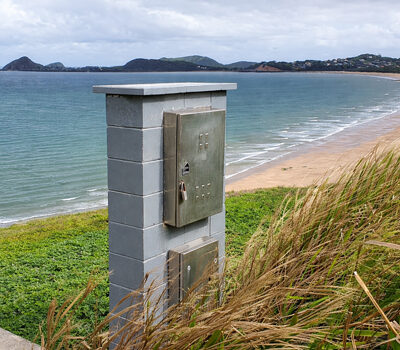
Stainless Steel
316-grade stainless steel offers the highest level of corrosion resistance, making it the preferred choice for coastal, marine, food processing and harsh industrial environments where long service life is essential.
B&R stainless steel enclosures feature a specialised N4 brushed finish that enhances corrosion resistance while providing a premium appearance.
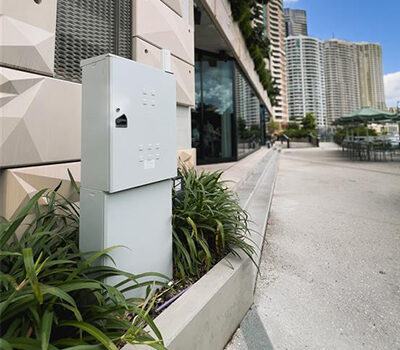
Zinc Coated Steel
Zinc coated steel is B&R’s primary enclosure material, providing an excellent balance of strength, corrosion protection and durability. Advanced pretreatment and powdercoating deliver reliable performance across commercial and industrial applications.
Ideal for most indoor and outdoor installations, zinc coated steel offers proven protection where the extreme corrosion resistance of stainless steel is not required.
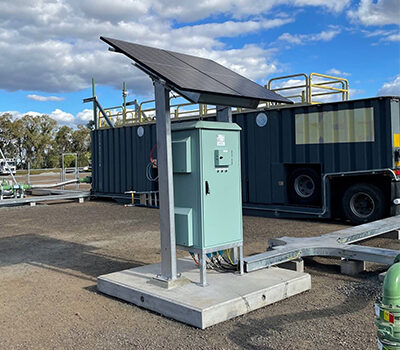
Aluminium
Powdercoated aluminium offers improved corrosion resistance over mild steel while remaining significantly lighter. It is well suited to coastal installations, remote sites and applications where weight is an important consideration.
Although aluminium performs well in saltwater environments, it is generally not recommended where strong alkaline chemicals are present.
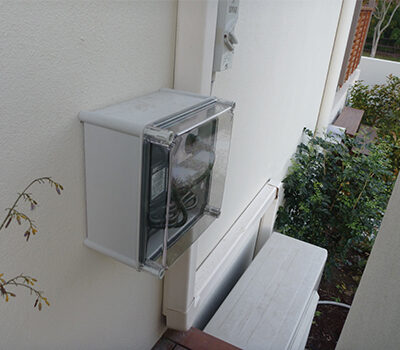
Insulated
Insulated enclosures provide a lightweight, corrosion-resistant solution for residential, commercial and light industrial applications. Their non-metallic construction makes them ideal for coastal and corrosive environments where long-term corrosion resistance is required.
Compared with metal enclosures, insulated products generally offer lower impact resistance and are better suited to lighter-duty applications.
Choosing the Right Material
Indoor – No Gas, Chemicals or Fine Dust
Most enclosure materials are suitable for clean indoor environments. Selection should be based on the application, equipment requirements and required IP rating.
Recommended materials:
- Insulated (plastic)
- Zinc coated steel
Indoor – Gas, Chemical Contaminants or Fine Dust
Chemical exposure varies depending on the substance and concentration, with different materials offering different levels of resistance.
Recommended material:
- 316 stainless steel – suitable for most chemical environments and ideal where fine dust is present to minimise corrosion risk.
Hazardous Areas
Where an area is classified as hazardous (potentially explosive), specialised enclosures may be required.
Typical requirements:
- Explosion-proof or increased safety enclosure
- Typically manufactured from 316 stainless steel
- Certified for the relevant hazardous area classification
Outdoor – No Gas, Chemicals or Fine Dust
Recommended materials:
- Aluminium
- Zinc coated steel
- Insulated (plastic) UV exposure may cause cosmetic discolouration over time without affecting structural performance
Outdoor – High Salt Deposition (Non-Coastal)
Mining and heavy industrial environments can experience high salt deposition, increasing the risk of corrosion.
Recommended material:
- 316 stainless steel – provides superior corrosion resistance in aggressive industrial environments.
Coastal – High Salt Deposition
Coastal environments present a significant corrosion risk due to airborne chlorides. Selecting the correct enclosure material is essential to maximise service life.
Recommended material:
- 316 stainless steel – the preferred choice for coastal environments, depending on local salt deposition levels.
Installation guidance:
AS2699.1 recommends stainless steel where salt deposition exceeds 60 mg/m²/day.
Position enclosures to maximise natural rain washdown.
Where washdown is limited, regular cleaning is recommended.
Alternative:
Aluminium provides excellent corrosion resistance for many coastal applications but offers less resistance to tea staining than 316 stainless steel.
Manufacturing Quality
B&R uses premium materials and proven manufacturing processes to deliver long-term durability, corrosion resistance and reliable performance across every enclosure range.
316 Stainless Steel
Key Benefits:
- Exceptional corrosion resistance
- High structural strength
- Clean, professional appearance
The naturally occurring chromium-rich oxide layer provides outstanding protection, making 316 stainless steel ideal for coastal, marine, food processing and chemically aggressive environments.
Surface Finish
B&R stainless steel enclosures feature an N4 brushed finish (maximum Ra 0.4 μm), improving corrosion resistance while making surfaces easier to clean and maintain.
Tea Staining
Tea staining is a cosmetic surface discolouration that may occur in high-salinity environments. It does not affect the structural integrity or corrosion resistance of the enclosure.
B&R is proudly accredited by the Australian Stainless Steel Development Association (ASSDA).
Zinc Coated Steel
B&R’s zinc coated steel enclosures utilise a hot-dipped zinc–iron alloy base combined with an automated pretreatment and powdercoating process to deliver outstanding corrosion protection and long-term durability.
Pre-Treatment Process
- Alkaline cleaning
- Freshwater rinse
- Iron phosphate coating
- Freshwater rinse
- Demineralised water with polymer additive
Every batch is verified through titration testing to ensure consistent quality and process control.
Powdercoat Finish
Average coating thickness:
- Ripple finish – 100 μm
- Gloss finish – 70 μm
Minimum coating thickness:
- External – 60 μm
- Internal – 25 μm
Fully compliant with AS/NZS 4506.
Testing & Quality Assurance
All powdercoated enclosures undergo rigorous testing to Australian Standards, including:
- Coating thickness
- Cure / solvent resistance
- Adhesion (cross-cut)
- Colour matching
Other Materials
Aluminium
Lightweight, naturally corrosion resistant and powdercoated for long-term durability.
Insulated
Non-metallic construction provides corrosion resistance and electrical insulation without the need for additional surface treatments.